Tajhat Jomidar Bari
Overview
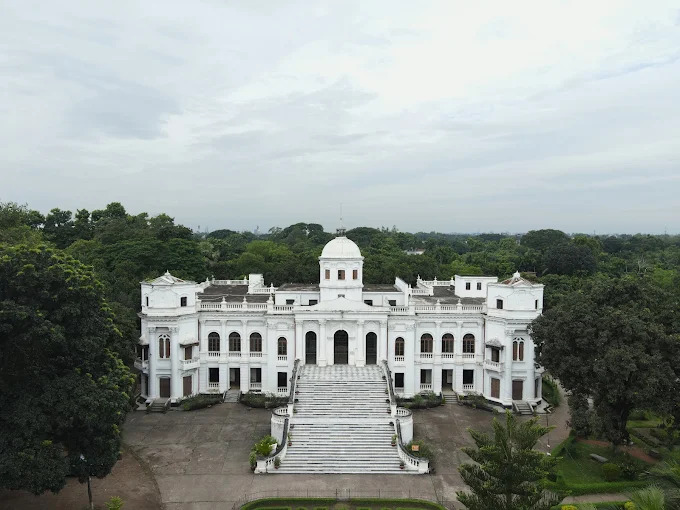
Tajhat Jamidar Bari, also known as Tajhat Palace, is a historic zamindar (landlord) palace located near Rangpur, in northern Bangladesh. It is one of the most famous heritage buildings in the country and a major tourist attraction in the Rangpur region.
The palace was built in the early 20th century during the British colonial period by Maharaja Kumar Gopal Lal Roy, a wealthy zamindar. It represents the lifestyle, power, and architectural taste of the elite landlord families of that era.
Architecturally, the palace is a blend of European classical and Mughal styles. It features a grand white marble staircase, large columns, wide verandas, domes, and a U-shaped structure with spacious rooms. The palace is surrounded by ponds, gardens, and open green areas, creating a calm and scenic environment.
Today, the palace is no longer used as a residence. It has been converted into the Rangpur Museum, where historical and archaeological artifacts are preserved. Visitors can see ancient manuscripts, sculptures, terracotta items, old weapons, religious texts, and many objects from different periods of Bangladeshi history.
Tajhat Jamidar Bari is important because it represents:
- The zamindari system of Bengal
- Colonial-era architecture
- Cultural and historical heritage of northern Bangladesh
- The transition from royal residence to public museum
- It is now both a tourist site and an educational heritage center, attracting students, historians, researchers, and travelers from across the country.
📜 History
- Construction period: Around 1908–1917
- Builder: Maharaja Kumar Gopal Lal Roy
- The name “Tajhat” comes from the word “Taj”, the business brand name of the Roy family.
- Around 2,000 workers worked for nearly 10 years to complete the palace.
- Built during the British colonial period, combining European and Mughal architectural styles.
🏗 Architecture & Design
- Grand white marble staircase at the front
- U-shaped structure
- About 22 large rooms
- Beautiful columns, domes, verandas, and arches
- Large ponds, gardens, and open green space around the palace
- Strong influence of European classical architecture
Present Use – Museum
Today, the palace is used as the Rangpur Museum (since 2005).
Museum collections include:
- Terracotta artifacts from the 10th–11th century
- Ancient manuscripts in Sanskrit and Arabic
- Old copies of:
- Mahabharata
- Ramayana
- Quran from the Mughal era
- Zamindar family items:
- Weapons
- Furniture
- Historical documents
- Sculptures and stone statues
📸 Photography inside the meseum is usually prohibited.
⏰ Opening Hours (Approximate)
Winter (Oct–Mar)
- 9:00 AM – 5:00 PM
- Lunch break: 1:00 – 1:30 PM
Summer (Apr–Sep):
- 10:00 AM – 6:00 PM
❌ Closed on Sundays and government holidays
🎟 Ticket Price (Approximate)
- Bangladeshi visitors: ৳20
- Foreign visitors: ৳200
- Students: Discounted rates available
📍 Location
- Tajhat area, about 3–6 km southeast of Rangpur city
- Easily accessible by rickshaw, auto-rickshaw, or local transport
🌿 Environment
Calm and peaceful surroundings
Green gardens and water bodies
Ideal for:
- Family visits
- Educational tours
- Photography (outside)
- History lovers
⭐ Why It’s Special
- One of the finest zamindar palaces in Bangladesh
- Rare example of colonial-era elite architecture
- Combines history, culture, and museum experience in one place
- Important cultural heritage site of northern Bangladesh
✅ Travel route guide from Dhaka
✅ One-day Rangpur tour plan
✅ Best photo spots
✅ Visitor tips
✅ Google Maps location:
Historical places of Rangpur (Bangladesh)